
-
Truly Happy

Thinking about Psalms 1, 19, and 119
How many of us are sincere enough to say “I want to be happy”? Is there someone who would say “I don’t want to be happy, I want to be sad. Every day, I desire nothing but sadness”? Of course not! Everyone wants to be happy, and we even wish it on others: “Merry Christmas, Happy New Year”!
These psalms are not talking about hoping for temporary happiness. It is not like the Peruvian Cusqueños, who could say “Cienciano (their team) won the cup”. We are searching for a deeper and more lasting happiness.
Many times we lie to ourselves when we say things like “I can be happy, or I can follow God”, or “It really is a sacrifice, but I must follow God”. We often convince ourselves that a good Christian isn’t really happy, but is merely trudging through life. I believe that the reason is this: We look for happiness in the wrong places. Psalm One teaches us this amazing principle: If I want to be happy, there are things I must seek, and things I have to reject.
To be happy, there are certain things you have to reject. What must I reject? Firstly, reject the advice of bad people. i.e. “Just listen to your heart”, “do what you want”, “you have to love yourself before you can love others”, “You don’t have to be so radical, always talking about God and the Bible”.
Secondly, reject the influence of sinners. For instance: a man who works in a factory, and everyone else goes for a beer. He tells them “I am not going” and they answer “Oh, you are a Christian, you cannot have any fun”. He may reply “I am not avoiding the bar because of some set of rules, but because the Bible says to be happy I should avoid certain influences.”
Thirdly, reject a wicked lifestyle. Why? The mocker not only rejects God but mocks God. Does this mean I should separate myself from every sinner? Biblically speaking, do I have to get away from the world? No! but I must not be influenced by the world.
But this is not all. There’s something I have to actively do. I not only reject worldly influences. To be happy, there are certain things I have to choose. I must choose to feast on God’s Word.
How do I do that? I meditate on the Word of God. This is not like an Eastern meditation, emptying of the mind. Meditate here means “to murmur or whisper”.
The phrase “day and night” could be understood as “all day” but it is certainly not less than twice a day. You might say “Do you sit reading the Bible all day?” No, but if I want to be happy, I will read and meditate on the Word of God. Many might see this as rather extreme. Perhaps some wonder if it is actually worth all the effort. What is the result? If you choose these things (according to verse three) you will not be shaken. This is not talking about the prosperity gospel. Let us not imagine that being a believer your wife will always be faithful, you will never pop your tire, and you will be able to easily pay all your bills.
Difficulties will come, but when one obeys these verses, he will remain happy and prosperous. The phrase “Streams of water” (verse 4) can be translated as “irrigation canal”. This means that you, like that tree, will always have access to life-giving water.
You say “But what about worldly people? They have so much money, seem happy, and apparently, they get along fine while rejecting God?”
If you think about Tiger Woods, you see that he had all the money in the world, but his personal life was a mess (which was only later revealed) and it often is so for the rich. Even if the world is happy, it is only for a short time. “Why is that?” you might ask. The Bible teaches: He who does not follow God’s advice will not be happy. How do we know that? The wicked man will disappear according to verse four. Additionally, when God’s people assemble, the unrighteous will be excluded (verse five)
Why is this? Because God knows who are his, and who are the worldly.
How can we make an application of these truths? Many have no plan for Biblical reading. If I fail to plan, I plan to fail. You and I must have a plan for searching the Scriptures
I will pray before reading the Bible: Lord I want to understand and delight myself in your Word. When I finish reading the Bible or listening to a sermon, I will pray: Lord, help me meditate. Drive this truth deep into my heart. I will comment about my prayer in my Bible journal in order to keep me accountable.
I will move on very quickly since I used so much space to talk about Psalm 1. The verbs in Psalm 19 that stood out to me the most are those that describe the “law of the LORD”. The law of the LORD is perfect, revives, me, is sure, makes me wise, rejoices my heart, enlightens my eyes, etc. Perhaps some would divide this Psalm into two parts: general revelation and special revelation. I believe that the main point is summarized at the end: let my words and thoughts please the Lord.
According to my count, the word “delight” appears 10 times in the ESV version of Psalm 119. Most of these occasions are speaking of the delight that a believer has in the Word and ways of the Lord. Too many times I act as if reading the Word were a drudgery or a duty. Too often I think of God’s commands as monotonous, boring, or grievous. Unfortunately, I cannot simply flip a switch and cause that to change. There are several things that I can do. I will pray that God allows me to see wondrous things out of His law (119:18). I will examine myself for any sin that is keeping me from delighting in the Lord (verse 22). I will keep my way pure by guarding His Word in my heart (verses 9-11). I will meditate on his precepts (verse 15). I will remember that his affliction keeps me from going astray (verse 67). I will praise the Lord as He grows my delight in Him (verse 108).
-
Book review of “What is the mission of the church?”

by Kevin DeYoung and Greg Gilbert, Crossway, 2011. 288 pp. (using Scribd app.)
DeYoung and Gilbert have embarked on a journey that could be considered fraught with peril. They have attempted to not only define what the church’s mission is, but to explore at length how that mission plays out in the everyday life of the broader church, and in some sense, the individual believer’s as well. These topics are delicate enough in some circles, but the authors forge onward by specifically focusing on social justice. An interesting dynamic is that DeYoung is a RCA minister and teacher, while Gilbert is a Southern Baptist pastor.
The book begins with this quote “if you’ve been involved in a church, you’ve probably wondered from time to time, ‘What are we trying to accomplish anyway?’”(15) . The authors have done their best to answer this under three major headings; understanding our mission (approx. 66 pages), understanding our categories (approx. 136 pages), and understanding what we do and why we do it (approx. 44 pages). You can see what information the authors consider the most pertinent; they spent well over half the book on the center section, which includes themes such as a “narrow” or “broad” view of the Gospel, the kingdom, social justice, and shalom. To further prove their point, they turn our attention to the book of Amos. “Amos 5 reaffirms what we’ve seen in the previous Old Testament passages. God hates injustice. But injustice must be defined on the Bible’s terms, not ours. Injustice implies a corrupted judicial system, an arbitrary legal code, and outright cruelty to the poor.” (176). They lean heavily on Biblical theology throughout their book, perhaps a little too much, considering this is not proposed as a Biblical theology text. They have closely compared the idea of the current mission of the church with the idea of kingdom in the Bible. This leads them to make connections with and ultimately define what is the Gospel in two very different ways. One quite broad: showing the effects of the Gospel, and the other more narrowly focused on the actual good news of the Gospel. Although all true believers should be able to agree on what the Gospel is, as laid forth in 1 Corinthians 15, it is somewhat surprising that these authors coming from different backgrounds would co-author a book and include a lengthy section on the kingdom, which can be a point of contention between these two denominations.
I really appreciated their point that the “mission” of the church can not be as broad as “loving your neighbor” or simply doing good. “The mission of the church is to go into the world and make disciples by declaring the gospel of Jesus Christ in the power of the Spirit and gathering these disciples into churches, that they might worship and obey Jesus Christ now and in eternity to the glory of God the Father.” (268) I also agree that we as Christians are not building God’s kingdom. They point out that Biblically “verbs associated with the kingdom are almost always passive (enter, receive, inherit) (21). However, their hope that these distinctions do not discourage believers from doing good works in a visible way is a point well taken. They posit: “If we want to see our brothers and sisters do more for the poor and the afflicted, we’ll go farther and be on safer ground if we use grace as our motivating principle instead of guilt.” (197). I highly recommend this book to every believer in order to more fully understand the reason we, as the church, have been put here by God on the earth.
See here on Amazon
-
Review of Misreading Scripture with Western Eyes
Book review by Bernard J. Fitzgerald

by Brandon J. O’Brien and E. Randolph Richards, IVP books, 349 pp. (Using Scribd app.)
Many people picking up this book would have a long history of church attendance, Bible study, and perhaps even theological education. Most of them would believe that they have a solid grasp on Scripture, and probably understand the majority of the Bible. I would fit into those categories, and yet I was pleasantly surprised by the careful study and deep insights this book provided me. For instance, O’Brien and Richards share an anecdote about people in Western cultures vs Eastern (Russian, specifically) who retold the story of the “prodigal”. Only 6% in the USA vs 84% in Russia mentioned the detail of the famine in the story. This is due to the fact that the Russians had a severe famine in their recent history. This illustrates how easily a Westerner can overlook certain points which may seem obvious to a person from the “majority-world”. Although I have been a missionary for 16 years in Peru South America, in a culture different from my formative years, I still found that the authors brought many new ideas into my cultural awareness. I am certain that the authors would be happy to hear that since they stated “One of our goals in this book is to remind (or convince!) you of the crosscultural [sic] nature of biblical interpretation. We will do that by helping you become more aware of cultural differences that separate us from the foreign land of Scripture.”(12)
The authors have divided the book into three main parts. “In part one, we discuss cultural issues that are glaring and obvious, plainly visible above the surface and therefore least likely to cause serious misunderstanding. In part two, we discuss cultural issues that are less obvious. They reside below the surface but are visible once you know to look for them. Because they are less visible, they are more shocking and more likely to cause misunderstanding. Finally, in part three, we address cultural issues that are not obvious at all. They lurk deep below the surface, often subtly hidden behind or beneath other values and assumptions. These are the most difficult to detect and, therefore, the most dangerous for interpretation” (17) The truth is that most of us who seriously read Scripture believe that we approach the sacred book with an open heart and a neutral mind. Perhaps we also need to add understanding of the culture in which this book was written.
O’Brien and Richards tackled some issues which will be of great interest to those serving overseas, or those serving minority cultures within the confines of the United States. Time is one subject which can be very tricky for those accustomed to punctuality, especially when working with people who are more focused on the relationships with people who are present. Gifts are another sensitive subject in many areas of the world where the gift can be viewed as entirely necessary and appropriate or alternatively a bribe. Riches is another theme confronted by the authors, who clearly demonstrate that Westerners (who are generally wealthy by the world’s standard) gravitate towards Bible verses on saving and stewardship, while majority world cultures (who quite often experience subsistence living) will focus on verses about God’s provision (such as Matthew 6). The authors continue by showing that the topic of gifts in relation to “patron” and “clients” can even affect a Westerner’s understanding of salvation. “Words we usually consider particularly Christian terms-grace and faith were common parlance before Paul commandeered them. The undeserved gifts of assistance the patron offered were commonly Called charis (“grace” and “gift”). [8] The loyalty the client offered the patron in response was called pistis (“Faith” and “faithfulness”).” (216)
Finally, the book shares three ways how we as Westerners often individualize texts and perhaps apply them incorrectly, using 2 Kings 24:3 as an example. “First, Western readers tend to ignore the context.”(261) Second, “Western readers misread the passage: we unconsciously turn the us into me.” (261) “Third, we Westerners tend to microwave this verse. That is, we fast-forward the outcome.” (263) Awareness and correction of these three issues very possibly would change our relationship with the God of the Bible.
In conclusion, I have been teaching courses on hermeneutics and exegesis during my entire career as a missionary, yet I had not personally considered many of these examples. Although some of these points would apply more to Eastern cultures, I believe the book is valuable for every cross-cultural worker, and really every believer who wants to read the Bible with more understanding.
Amazon link – https://a.co/d/9lEyN4l
-
See what God has done!
Prayer Letter – May 2023
“The ‘Gospel-destitute areas’ see us as criminal combatants, not friends (Colossians 4:2-4). We’re up against reigning principalities, religious powers, radical politicians, and recurring persecution. We get attacked from the front, from the rear, from the sides, and, yes, even from within (2 Corinthians 7:5). Sure, pray for our safety (Romans 15:30-31, 2 Thessalonians 3:2), but please don’t exert all your time there. Jesus made it clear that mission work is exceedingly unsafe, so we’re already past that hump. We’d love to avoid pain, but not at the expense of boldness; Christ must be lifted up at any cost (Philippians 1:20-21). So pour over our prayer letters (and reply once in a while). And when you pray, pray the prayer that Paul requested: that the word of the Lord would spread quickly and be glorified (2 Thessalonians 3:1). That’s the crux of the matter. That’s the reason we came.” – David Hosaflook, missionary to Albania, Gospel Meditations For Missions.

We truly have an increasing conviction that if the Lord doesn’t build the house, they labor in vain that build it. This would certainly apply to church planting, but also to individual discipleship, personal evangelism, child rearing, and even medical campaigns. We praise the Lord for dozens of visitors over the last few months, several new families that have joined the church, a baptismal service, and a few precious souls who have been saved. The church folks did a great job with VBS, and I had the privilege to preach 14 times to about 200 at youth camp. The Lord is certainly at work here, but that is not say that there are no difficulties. We have had to confront sin several times recently, and we ourselves have challenges and weakness.

While serving at MK camp in January, I had an MRI due to back pain, and discovered a mass inside my spine. After much investigation, we opted not to treat it in Peru. In early March we flew to Sao Paolo, where I had surgery on this lesion embedded within my spinal nerves. The doctors believed it to be a simple growth, but after an extended wait pathology reported that it was a cancerous type called ependymoma. I now have a large scar, as well as a couple of titanium screws, so you may refer to me as “iron-man” if you wish. On a more serious note, God truly blessed: had it not been for the back pain and MRI, this probably would have taken much longer (maybe too long) to discover. Kind missionary friends in Brazil helped us get this set up and took care of us in many ways. We were able to travel as a family, thanks to the generosity of Hillsdale Baptist. The surgery removed the entire tumor, and no others were visible post-op. Loren’s mother was able to join us for one week. Many church members stepped up to serve while we were gone. One member took us out to lunch and lamented that she had not really prayed for me seriously up until this point, but God used it in her life.
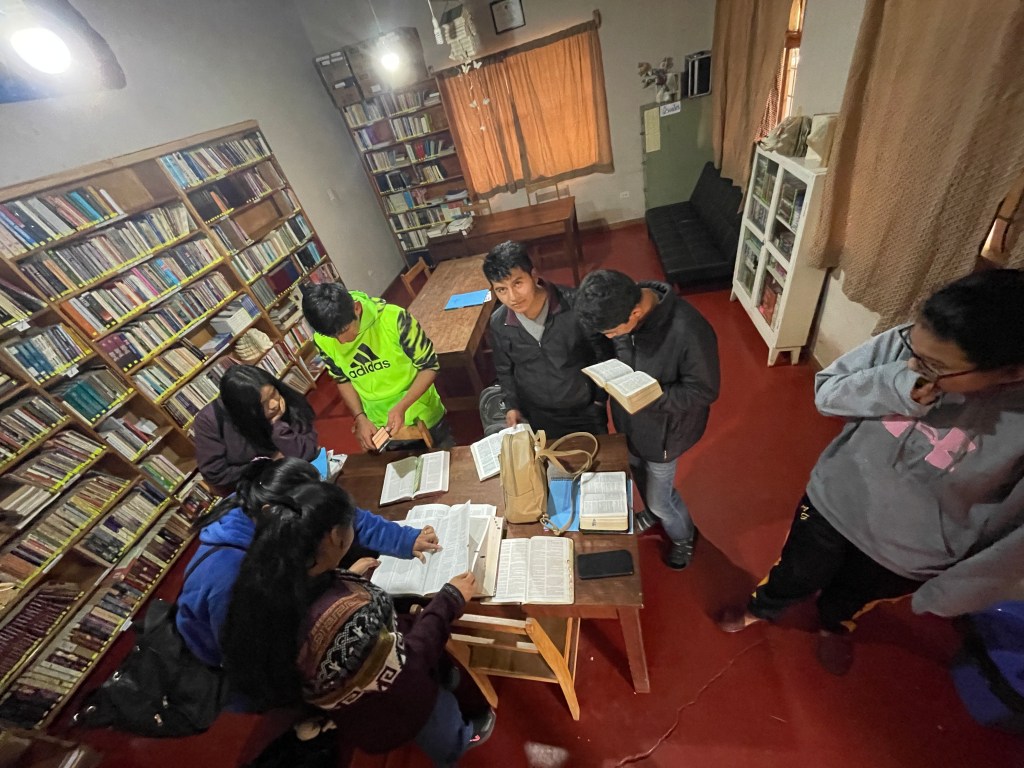
Although we missed two Sundays while traveling, and I had to slow down in some of my physical activities, the Lord has kept us busy and fruitful. Our family continues building relationships through the kids’ sports activities. Loren faithfully teaches the ladies. I taught two block classes at the Bible college in Cusco, as well as preaching a church anniversary while there. I already have less back pain than I did pre-surgery. This is huge a blessing as I teach youth, as well as preach 3-4 times per week, and disciple many individuals and couples.
Lord willing, we will have a teen outing June 3. June 12-16, I will be taking a block class. June 18, we will hold a big Father’s Day outreach at church. June 19-21, Loren and I will go to Lima for a follow-up MRI (which I will need regularly for some time). June 27-29, Mike and Hannah Martin visit. July 14-23, we will have a mission trip from the Cusco Bible College. August 6-12, we will host a medical mission campaign deep into the jungle.

Prayer Requests: 1. Souls have been saved, and we have celebrated a baptism. 2. MRI cancer scan next month. 3. Possible pastoral candidate coming. 4. Upcoming teen outing (with unsaved visitors). 5. Loren is facing regular health struggles with Hashimoto’s and other things. 6. Joseph was very sad that his goats were killed during our travels: MK life has its trials.
Praises: 1. Spinal surgery was successful, and I don’t currently need further treatment! 2. Initial plans for parsonage are done. 3. Multiple volunteers for the medical campaign in August. 4. I am working towards an advanced ministry degree. 5. The Mother’s day and Easter outreaches went splendidly! 6. The civil unrest and strikes in Peru are over for now.

Grace and peace, The Fitzgerald Family
-
Review of Ministering in Honor-Shame Cultures
By Jayson Georges and Mark D. Baker, InterVarsity Press, 295 pp. (Accessed on Hoopla application)

Have you ever put on a pair of colored glasses and noted that not only do a few items change color, but nearly everything is now viewed in a different hue? I suspect that will be the case for many readers of this book, especially those from the Western world, who have never noticed this Honor-shame palette with which the Bible was written. Authors Georges and Baker start by giving us some rather shocking stories to help awaken us to the reality of the “honor-shame” cultures all around us. This nomenclature “refers to collectivistic societies where the community tends to shame and exclude people who fail to meet group expectations, and reward loyal members with honor. In contrast, an ‘innocence-guilt culture’, as commonly encountered in Western, Anglo contexts, is more individualistic. It relies on conscience, justice and laws to regulate social behavior.” (Pg15) Perhaps many Western Christians will wonder why they should pay attention to this book if they are not planning on moving overseas. One main reason is that “In 1900, 82 percent of all Christians were white; by 2050, about 80 percent of all Christians will be nonwhite.”(Pg17) The authors continue by pointing out that within the US, the population has become far more culturally diverse and the dynamics of the “honor-shame” cultures must be understood in order to effectively witness and make disciples. Additionally, “People commonly note that Western culture is becoming increasingly shame driven. Even the anthropologist who pioneered the ‘West is guilt-based, East is shame-based’ cultural dichotomy already observed in 1946, ‘But shame is an increasingly heavy burden in the United States and guilt is less extremely felt than in earlier generations.’.” (85) Chapter one focuses largely on how widespread the “honor-shame” cultures are and their importance today. Chapters two and three explain many differences between shame cultures and guilt cultures, while showing how honor-shame cultures function. Chapters four and five focus on the nearly universal presence of honor-shame culture cues throughout the Bible. Noteworthy are three different indices (at the end of the book) with lists or stories of particularly relevant Scripture passages. Chapters six through eleven strive to be practical, illustrating how the mission of Christians often revolves around, or at least involves, the honor-shame culture. The authors also give eight practical “commandments” for relationships within honor-shame cultures. Georges and Baker have both spent significant time overseas and seen the dynamics of “honor-shame” cultures played out before them. For this reason, they are able to give many personal anecdotes, examples, and illustrations to help enlighten us, the readers. Without these personal stories, the book would probably feel quite dry, but still useful. Their observations and insights make the book highly enjoyable and practical. I find particularly helpful the recognition that this is not a black and white issue, but more of a sliding scale. To be honest, that dynamic doesn’t seem to be considered much throughout the book, but it is explained at the beginning (Pg 23). Nearly every “honor-shame” culture still includes some sense of guilt. Probably every “innocence-guilt” culture still has some ideas of honor and shame. The book is well researched, including a large section of end-notes, and is not a difficult read. I especially loved the sections that explained the Gospel in light of honor and shame. “As the honorable one, Jesus was also the honoring one who opened new vistas of honor for humanity. His words revealed God’s code of honor, and his deeds restored the dignity of the shamed. Jesus spent his years of ministry reincorporating the socially disenfranchised into the new people of God by removing their disgrace and granting a new honorable identity. Jesus conducted a ministry of status reversal. His life, death and resurrection finally solved the problem of shame and restored honor, as God promised to do through Israel.” (Pg76) I would recommend this book first and foremost to those preparing to move to the “10-40 window” since nearly all of the peoples in that area would be far into this spectrum. Secondly, I would strongly suggest that Christians who are regularly reaching out to, or engaged with, peoples from an “honor-shame” culture read this. Finally, every western believer who understands that their mandate, as a member of Christ’s body, is to make disciples of all nations would benefit from this tome.
-
Blood-thirsty bug

The bloated blood-thirsty bug buzzed by my ear during my first conscience moments. His was a fatal mistake. As I sat up to notice the sun beginning to send it’s first shoots across the sky and illumine our room my eyes began to focus, and my brain began to process. My wife and infant daughter lay next to me in bed, still taking their rest, and unaware of the day. This was a new day with all of it’s projects, tasks, joys, and work! Although there were many things on the list, the first was to take care of that terrible mosquito before he could wreak any more itchy welts on my family. The job was over quickly, for the fat fly had filled himself too much to move quickly, and was therefore easy prey.
What if they mosquito had the capacity to understand that if he were to insert himself inside our mosquito net for a night of gorging it would almost certainly mean death? If an insect could know such a thing, would he still find it worth it? Is a night of feasting on your favorite food a sufficient reward for the price of your life? Of course not. Any animal would have enough sense to preserve it’s life over the pleasure of a little food, right?
How many people, however, are doing the same thing? How many million souls around the world have heard the good news, or have an inkling of the one who created all of this and yet they pay no attention. Untold numbers, just like this mosquito, opt for a night of feasting at the price of their life. Perhaps they think that in the end they will escape. Perhaps that they think that the end of life on earth is the end of existence, as it is for the mosquito.
The vapor of life slips silently through their fingers as they marvel at the vanities before them, little knowing that when the fair is over and the music stops the lights will go out. Then, finally, they will mourn and weep for the wasteful way that they spent their minutes in shallow and temporal pleasure.

For what is a man profited, if he shall gain the whole world, and lose his own soul? or what shall a man give in exchange for his soul?
And I will say to my soul, Soul, thou hast much goods laid up for many years; take thine ease, eat, drink, and be merry. But God said unto him, Thou fool, this night thy soul shall be required of thee: then whose shall those things be, which thou hast provided? So is he that layeth up treasure for himself, and is not rich toward God.
repost from 2012
-
End of the Arrow
Is the mission impossible? Will the uncontacted ever be reached? Are we crazy?

These were just a few of the questions that raced through our minds as we heard the following news. A Peruvian man known to his friends as Chaco had apparently experienced an unexpected turn of events. He was actually somewhat of a legend in the jungle area of Madre de Dios, since he was the only one who had any sort of friendly interchanges with the savage and nomadic tribe known by most of the outside world as the Mash-co Piro. Known also as “The Invisible Tribe”, this tribe is difficult to describe since they have sought isolation and distanced themselves from any sort of civilization for generations. What we do know is that they speak a dialect similar to the Yine people, live by hunting and gathering, and do not know the one true God. Chaco was probably the world´s best source of accurate information about these wild people because of his repeated contacts. He had actually trekked deep into their prohibited territory, hunted, slept, and conversed with them. They came to him regularly to ask for machetes, pots, or trinkets, and he generously invited them to freely gather food from his farm. He was, in a very real sense, their only friend and greatest advocate in the world. No one knows exactly what went wrong, but in mid November there was apparently some sort of dispute between them. Perhaps he couldn´t give them what they were asking for, or perhaps they were upset about nearby settler´s actions and held him responsible, or perhaps it all came about because of an inter-family spat within the community. In any case, less than two months ago (written in 2012), on November 22nd the Mash-co Piros shot Chaco through with arrows in his own farm on an island of the upper Madre de Dios river.

This is sobering, not just because I was in that very spot looking for the Mash-co Piros with Chaco just two months before, but also because I was scheduled to be there with him again the very week he was shot. My desire was to visit him every few months, establish a good relationship, bring gifts for the nomadic unreached, and eventually seek friendly and prolonged contact with the savage tribe.

Our prayer for many years has been that God would grant us the opportunity to evangelize a people group who has never had a chance to hear the gospel. These recent activities have caused us to question if our dreams will ever be realized in Peru. Chaco was the Mash-co Piros’ best friend, source of food, supplier of metal goods, and appeared to be their ticket out of the stone age. If he, after his repeated and thorough contacts, had been pierced by their points, how can we ever hope to reach them?
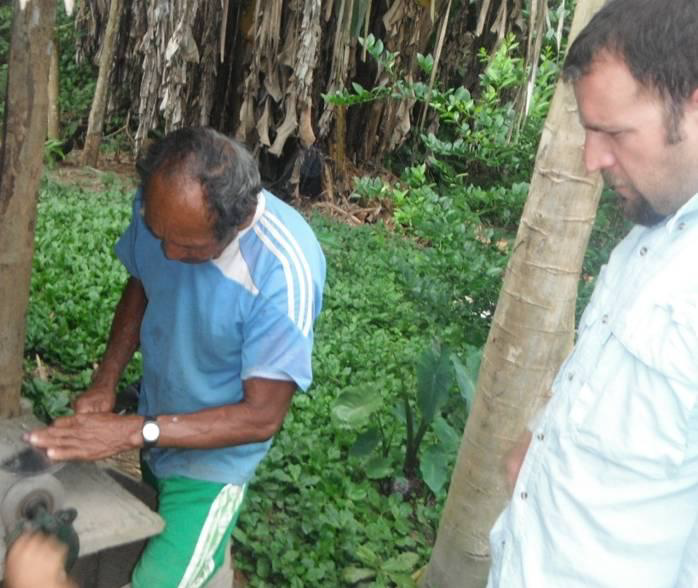
We have had to re-examine what brought us here. Is the Apostle Paul´s stated ministry philosophy still valid? He said “Yea, so have I strived to preach the gospel, not where Christ was named, lest I should build upon another man’s foundation.” (Rom 15:20). Does God still want missionaries to think as the apostle Paul did? The answer to this question is found in the very next verse: v21 ” But as it is written, To whom he was not spoken of, they shall see: and they that have not heard shall understand.” Paul, of course, was not original with this idea; in fact, he was quoting from the book of Isaiah, which is chock full of this theme: The rebellious, isolated enemies of God are redeemed and made into His own children. This theme, in reality, runs all through the Bible; beginning with the promise to Abraham that all nations of the earth would be blessed in him, winding throughout the Psalms with their talk of praise from ´´all the earth´´, to the book of Revelation, which declares that there will be “a great multitude that no one could number, from every nation, from all tribes and peoples and languages” worshiping the Lamb who was slain.
The real question is: Why would we not ALL jump at the chance to take the news of the worthy and majestic Lamb who was slain to those who may choose to treat us the same way that the world treated the Lamb? There is no greater privilege or higher calling than extending the reign of the coming king. As we continue to seek to reach the unreached, we ask that you would seek to advance God’s Kingdom on your knees. It is only by the prayers of God’s people that the powers of darkness are rendered ineffectual. The spiritual battle is relentless. Are you involved?
- Re-posted from 2012
-
Identity
Immensely successful would be one way to describe the book called “Atomic Habits” written by James Clear. He talks about why our habits matter so much. Our brains are always trying to create habits, which are sort of like short-cuts which allow our body to work while our mind focuses on something else. Have you ever driven to your house or work when you actually meant to drive somewhere else? Kind of scary, right? Do you procrastinate? Do you focus too much on the goals and forget about the importance of the process? Yes! We all do. Caveat: I haven’t read this book, and am not promoting it.

One of the ideas that he talks about is the “identity-based approach”. James Clear points out that you will never read a news article that says |Man eats chicken and salad for lunch| it will only be news-worthy when he loses 100 lbs. You will never see a story stating |Man writes 500 words per day| But when his book becomes a best-seller, you will see him in the news. This biases us to focus more on the goal than on the processes necessary to attain the goal. The process is usually invisible, boring, and not news-worthy. We often think habits are important because of the results they attain, but the real reason that habits are important is because they are like a vote for the type of person that you wish to become. Habits are how you embody a particular identity. Every day that you make your bed you embody a clean and organized person. If you study for your classes regularly you embody a good student. Your habits are a vote for being a certain type of person.

Shooting basketball for 5 minutes doesn’t make you a basketball player, but if you practice every day for a year or two you would be a baller. It becomes part of your identity.
So ask yourself: who is the type of person that i want to become? What are the habits that type of person performs regularly? Once you begin to take pride or joy in that identity, it is much easier to continue the habit. A man who takes pride in the size of his biceps doesn’t have a hard time getting to the gym. A woman who takes pride in her beautiful hair easily takes time for a long hair care routine. Once something becomes part of your story, it is not hard to convince yourself about the habits. If your identity is “I am a runner” it is not nearly as hard to motivate yourself to run (especially compared to some of us). Doing one push up is not going to change your body. But it is a vote towards being the kind of person who doesn’t skip work-outs.

What if your spiritual life was very much the same? Reading your Bible for 5 minutes today may not radically transform your life, but it would be a vote towards the identity of a Scripturally-minded person. Memorizing one verse this week may not look like a big deal outwardly, but it would start to orient you as a person who hides God’s Word in his heart.
The truth is, if you are a Christian, you already have an identity. This is far more important than being a successful person, or a fit person, or a popular person. The Scripture says (among many other things) you are:
- Chosen by God – John 15:16
- A Child of God – John 1:12
- Called of God – Romanos 8:28
- Crucified with Christ – Romans 6:6
- A Royal Priest – 1 Peter 2:9
- A Friend of Jesus – John 15:15
- Crucified with Christ – Galatians 2:20
- A Citizen of heaven – Philippians 3:20
- A Disciple of Jesus – John 8:31
- A New Creation – 2 Corinthians 5:17
According to Ephesians 4:17-32 you are a Saint, no longer a gentile (unsaved person). You are called to walk worthy of your calling. What are the habits of a saint? If you have the identity of a person who has heard of Christ and learned of Christ how do you live? Now you:
- Don’t lie any more, but speak the truth v25
- You don’t angrily sin v26
- You don’t steal, but work and give v28
- You don’t talk dirty, but speak words of grace v29
- You don’t live in bitterness, wrath, and slander v31
- You instead are kind, tenderhearted, and forgiving v32
If you are a believer, this is your identity. Are you taking small steps to create habits that align with your goals? Are you becoming this kind of person as you make small changes in your life? How can you take one step forward to being more like Jesus and giving God more glory today?

-
December Deeds
December was quite the busy month: not the least of which were our three medical situations:

Loren had surgery at the beginning of the month for a large fibroid,

Joseph had dengue fever in the middle of the month

and I broke my hand at the end of the month.
But the Lord allowed us the privilege to minister in many ways as well.

ministry in a public school 
preach to the soccer team 
Christmas Eve family outing 
Family Christmas 
Christmas Candle-light service 
Paul & Kelly Jane Thomas visited 
New Year’s Eve fellowship 
Witnessing with a view 
youth group 
thankful for our large building 
college/career group actors 
college/career banquet 
outreach for new church plant 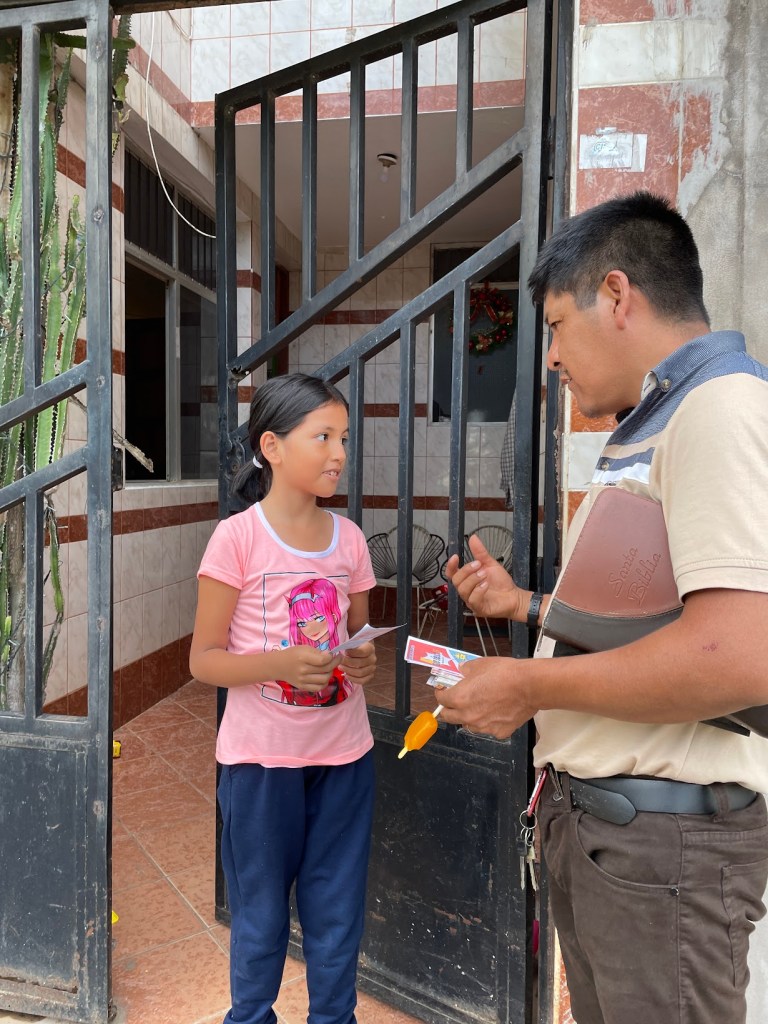
inviting kids for Bible club 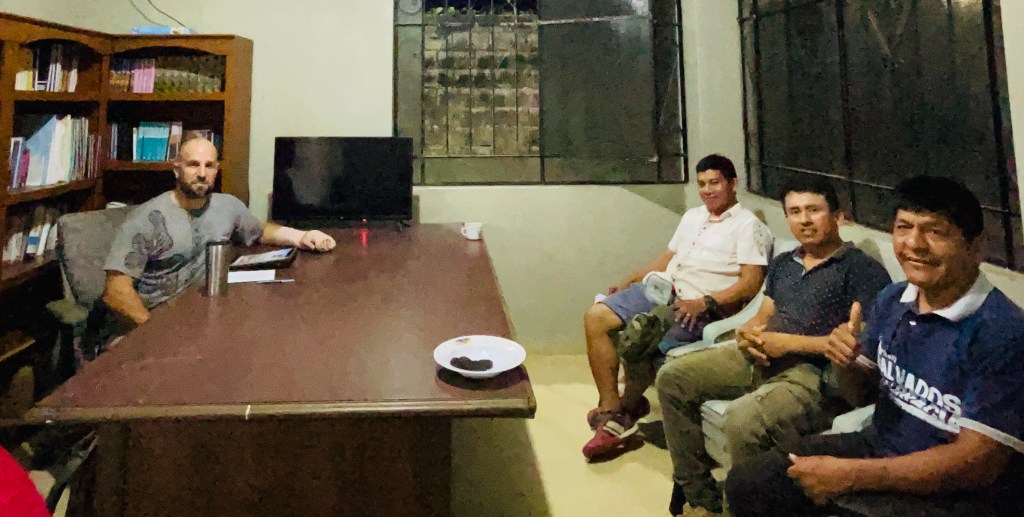
training men for Bible study -
November News
ok, you got me… a few of these things happened slightly outside of November, but it was a busy month!

going to a nearby village 
Native village: Santa Teresita 
church-plant in nearby town 
baptism in Calca 
Church anniversary near Cusco 
Joseph is 14! 
unplanned departure 
teaching in a school 
Ladies Bible study 


Thanksgiving! talking to the kids post-op. 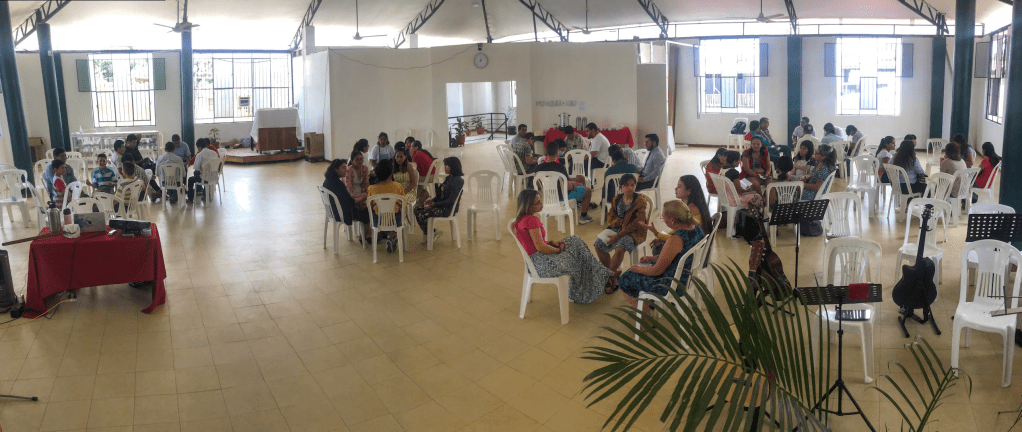
Sermon follow-up 

teen group! 

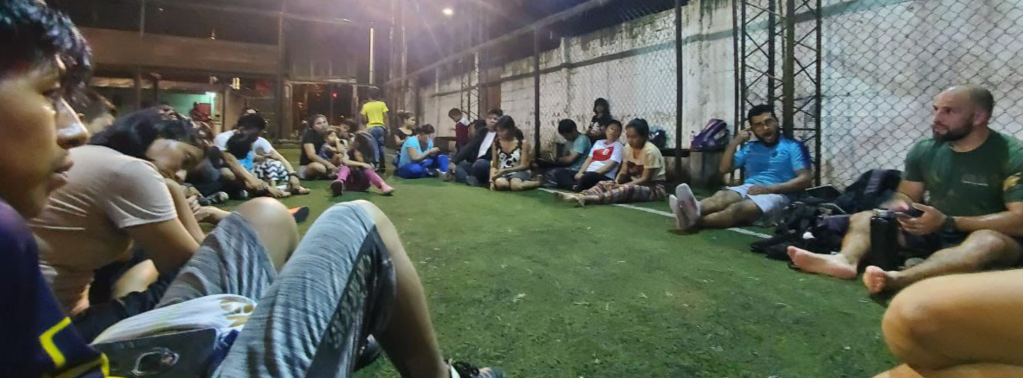
sports outreach 
Piled in for fun! 
The same as Joseph (but the numbers are reversed) 
Two more professions of faith!

