-
November 2024 Prayer Letter




-
Review of “Instruments in the Redeemer’s Hands”

By Paul David Tripp
What is this book about and who should read it? The subtitle of the book really answers both of those questions. This book is for anyone in need of change (hint: that is all of us). The book is about (as the subtitle states) “People in need of change helping people in need of change”. Tripp has given us a very helpful resource, both for professional counselors and for average Christians. I believe that the mindset section at the beginning of the book would ideally be read by every believer. Here are a few things that I thought of utmost importance.
Tripp writes “In our self-absorbed culture, we need to see the grandeur of this kingdom. We cannot shrink it to the size of our needs and desires. It takes us far beyond our personal situations and relationships. The King came not to make our agenda possible, but to draw us into something more amazing, glorious, and wonderful than we could ever imagine.” (p.4) He continues by pointing our attention to the amazing throne-room scene in Revelation 19 and states “Two things capture the hearts of the assembled throng. The first is that Christ has won the final victory. His will has been done, his plan accomplished, and he reigns without challenge forever…The second glorious thing is that the ultimate celebration has finally come, the wedding of the Lamb. (p.5) I love the emphasis here on the person of Jesus Christ. Tripp reminds us that our lives, in similitude to heaven itself, are not really about us. They are about Jesus. The changes that He wants to work in us are ultimately not FOR us, but for Him. We must remember that the Christian life is really not about us being happy and comfortable, but about us being transformed into the image of Christ for the glory of Christ. The Holy Spirit applied this to my heart by reminding me that although my sinful flesh often pushes to be first and insists on its own way, God put me on earth for a bigger, better, and more glorious reason: That is to glorify Him. This is done as I change and as I help other people to change. I need to remember this truth as I counsel others because God wants me to help others to focus on Him and His glory. God wants me to turn the gaze and focus of other people back on Jesus Christ so that they might take their myopic vision off of themselves.
A second significant point in the book is that not only is change necessary for the glory of God, but change is possible by the power of God. “Jesus is saying, ‘Because I have come, lasting heart change can take place’.” If Jesus, the King, had not come to earth, would lasting change be possible? It would not. Tripp states “You cannot escape sin because it dwells within you. All the things you learn get twisted by its power. You can’t outsmart it or buy your way out of it. You can’t move to escape it. This is why the coming of the King is the best of news. Change is possible! You can stand amid the harshest realities of sin and have hope that will never disappoint you (Rom. 5:1–5).” (p.6) We try will-power, self-help, positivistic messages, and psychological theories, but at the end of the day, we return to our sinful ways. We fall into self-loathing because we cannot seem to defeat even the smallest habits, and we feel constantly defeated. We determine that we will not speak out in anger or speak up in self-defense, yet we continue to return to these old ways. The truth is that we are not able to change ourselves because sin is in us. The old paths of the sin nature continue to push us down and force us into the ancient wagon ruts because we do not “reckon ourselves dead to sin and alive to God.” We can do this because we have died with Jesus Christ, and our lives are hid with Him. This is incredibly good news, because everyone, even those who hate God, has bad habits that they would like to change.
A third incredibly significant point in this book is the emphasis on sin. Our fundamental problem is not a lack of information, education, or reformation. What we really need is transformation. Tripp points out “The Bible says that our core problem, the fundamental reason we do what we do, is sin. What is being said here? Scripture is defining sin as a condition that results in behavior. We all are sinners, and because of this, we all do sinful things. This is why I said that our core problem precedes our experience.” (p.10) Tripp continues by pointing out what sin does to us. He call it “the grand psychosis” (p.12) and from pages 13 to 15 states that sin produces rebellion and foolishness which “renders us incapable of doing what God has ordained us to do.” This point was a great reminder for me spiritually, because I like to blame my problems on others. My flesh prefers to act as if the issues were someone else’s fault. The Lord has reminded me that I still sin because I am a sinner. My condition results in my behavior. This is helpful in counseling scenarios because a counselee prefers to blame his/her past, trauma, upbringing, parents, teachers, etc. The truth is that he does not control much of what goes on in his life, but what he can and must control is his reaction to scenarios and circumstances.
On page 126 is the beginning of a fourth point. There I found a graphic explaining “The Four Elements of a Loving Ministry Relationship”. These are requisite if a person is to be a help and blessing to others. Tripp states that the Christian must “Enter the person’s world, Incarnate the love of Christ. Identify with suffering. Accept with agenda.” Each of these four phrases could really be a full lesson. For instance, Tripp points out “There is no shortage of need in this world. Our problem is that we miss the opportunities God places in our path.” (p.126) He continues by teaching that the entry gate is not the problem, the situation, or another person. You must “ask, ‘what is this person struggling with in the midst of the situation?’” (p.127) He points out four things to listen four to identify this entry gate: emotional words, interpretive words, self talk, and God talk. (p.128) He follows this up by pointing out the beginning of change can appear in horizontal trust, vertical hope, and commitment to the process. The second phrase is aptly described thus “As Christ’s ambassadors, it’s not just what we say that God uses to encourage change in people; it’s also who we are and what we do.” (p.134) He offer four reasons to incarnate Christ in the relationships God gives us “1. It is a protection for you… 2. It offers a living example… 3. It gives evidence of what the Lord can do… 4. It keeps Christ central.” (pp.136-138) We also must identify with suffering. We cannot do so in a trite way, spouting truisms. We need to understand personal suffering. Tripp points out 5 key truths in this regard “1. The Bible clearly declares that God is sovereign over all things – even suffering… 2. The Bible clearly says that God is good… 3. The Bible clearly says that God has a purpose for our suffering… 4. The Bible explains the ultimate reason why we suffer… 5. The Bible is clear that God’s sovereignty over suffering never: means that the suffering isn’t real… [nor] excuses the evildoer.” (pp.143-144) Instead, Tripp reminds us that all suffering is for a purpose. God has a greater and higher purpose, that we often do not understand. The Lord has already been working on me about this specific truth. Approximately one and a half years ago I discovered that I had a tumor encased in my spinal nerves. There were certainly no neurosurgeons in our Peruvian jungle, nor could we find any good ones in the capital, so we traveled to Brazil for better care. No one would choose to have a spinal tumor, which was later revealed to be cancerous, but the Lord taught me a little about suffering. I often suspect that my difficulties are because God doesn’t love me. In fact, Romans 5 teaches us that our tribulations are used to work change in us precisely because God loves us. The Lord continues to teach me this important truth. This is extremely useful in counseling, because a large percentage of counselees come to us because they are suffering. It is also helpful to remember that we too are sufferers. Tripp writes “This is also the identity we share with those we seek to love and help.” (p.148). We are not above suffering, and already have or will suffer. For his fourth point, the author reminds us to accept with agenda. We must accept the counselees emotions as understandable, without intimating that they are always pleasing to God.
Finally, a really helpful point begins on page 175 with an emphasis on questions. He writes: “1. Always ask open-ended questions that cannot be answered with a ‘yes’ or ‘no’… 2. Ask a combination of survey and focused questions… 3. Remember that certain kinds of questions reveal certain kinds of information… 4. Ask a progressive line of questions.” (pp.175-181) I found these questions, along with the reasoning, to be eminently practical for every counselor. I found myself convicted as I thought of times when I barged ahead with my own assumptions and ideas, disregarding caution and perhaps visual cues. Tripp points out “The forgiving and empowering grace of Christ is for sinners – the transgressor and the weak, the sufferer and the lost. People who do not see their need will not seek his help. But in the Messiah’s hands, our questions can become keys that open people’s prisons and cause them to rely upon Christ in new and profound ways.” (p.181) The questions given by Tripp will be of great help to every counselor who heeds them and uses them wisely in his counseling.
This book has a great many strengths. I relished the theoretical truths intertwined with Biblical theology at the beginning of the book, and I appreciate the helpful and practical points in the second part of the book. To be honest, it is difficult for me to think of weaknesses in the book. If anything is amiss, it is just too quotable. -
September Prayer Letter
-
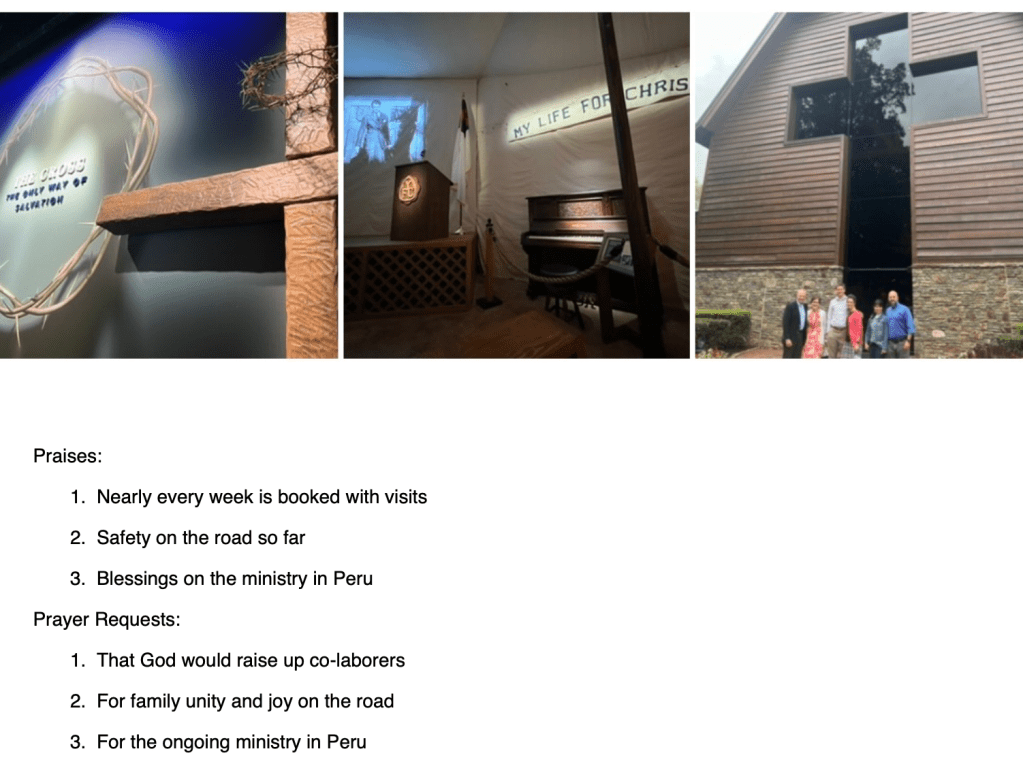
Have you heard of Triperspectivalism?
-
This is War!
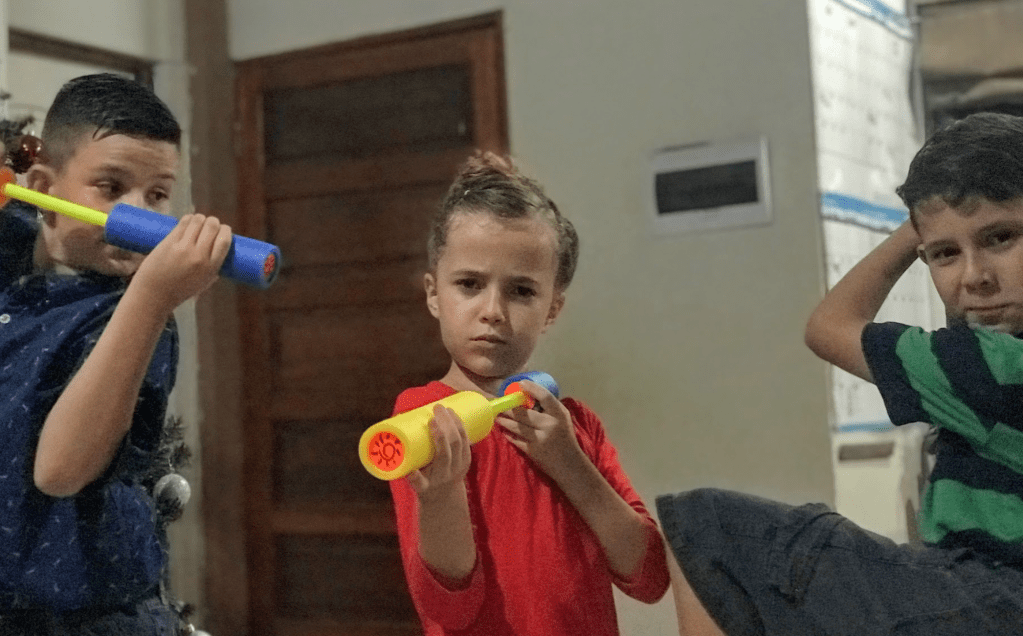
I just finished a book about a woman who had been fighting as a soldier, but was suddenly whisked, along with several others, to the United States. The purpose of her visit was to drum up support, and try to get the US to back her country in their war efforts. The book was fascinating and well written, and I enjoyed most of it, although it was definitely not written from a Christian perspective.
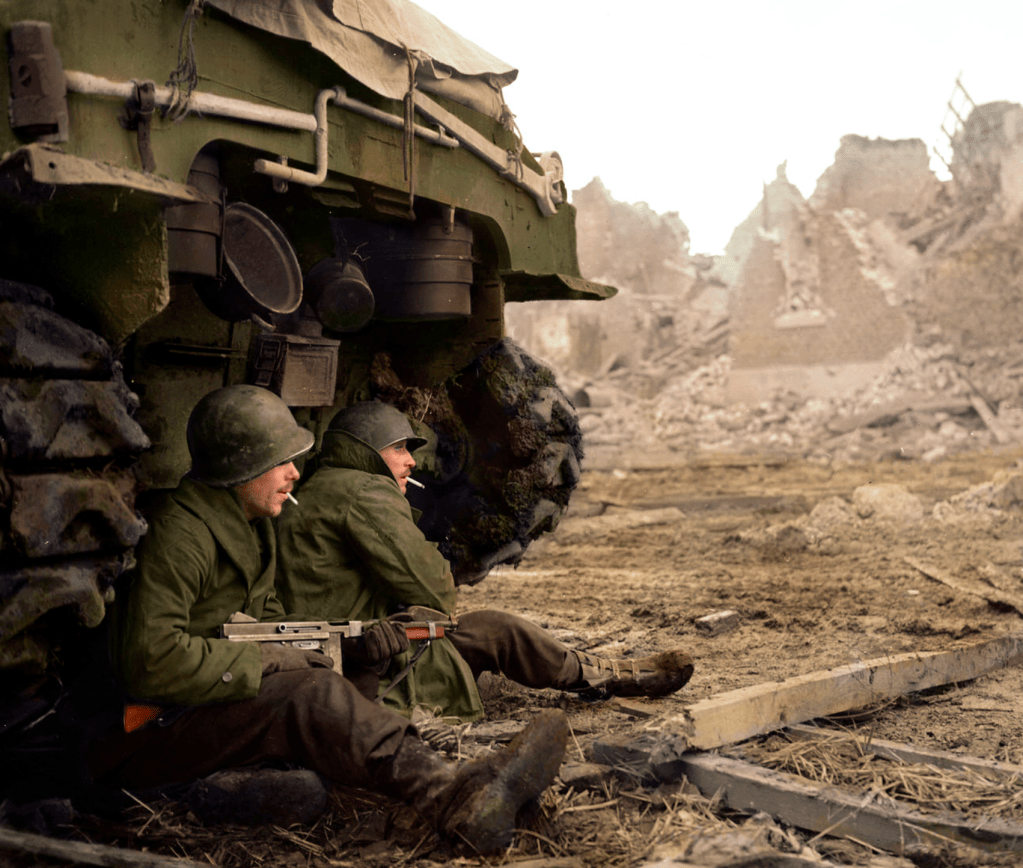
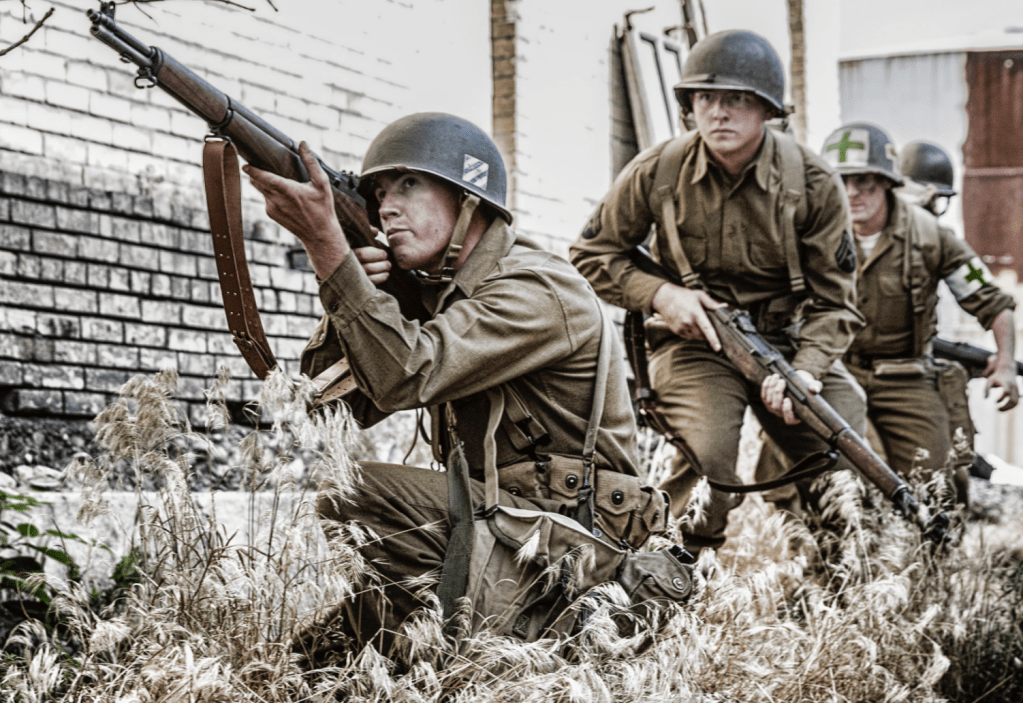

So go and remember, THIS IS WAR!
1 Timothy 6:12 Fight the good fight of the faith. Take hold of the eternal life to which you were called when you made your good confession in the presence of many witnesses.
2 Corinthians 10:4 The weapons we fight with are not the weapons of the world. On the contrary, they have divine power to demolish strongholds.
2 Timothy 4:7-8 I have fought the good fight, I have finished the race, I have kept the faith. Now there is in store for me the crown of righteousness, which the Lord, the righteous Judge, will award to me on that day—and not only to me, but also to all who have longed for his appearing.
-
Peru Medical Campaign, part 1: the Water of Life
MARCH 11, 2024 / ANTHONY / 0 COMMENTS

Every year I participate in a Medical Campaign in the Madre de Dios region of Peru. This year our team of 30 consisted of two physicians, four nurses, three dentists, a paramedic (yours truly), and several non-medical supportive personnel. Click here for a basic breakdown of the mission.
February 26th-March 2nd
7 days
6 villages
1 city
250-ish miles of river
Multiple days of rain
Over 300 patients
49 confessed Christ as Savior
1 Great God
Travel Journal, 139
Dare I pick a theme for this year’s medical campaign in Peru? I go back every year and every year presents its own special challenges. One year, political unrest delayed our visit to these far reaches of the Peruvian jungle. Another year, several team members became heat-exhausted. Once we had to use two boats just to get where we were going.
This year?
Water.
It could hardly be ignored. It was everywhere. In every village.
The tiny village of Tipishka sits lower on the banks of the Las Piedras than any other village we visited. Smiling faces poked through the trees, watching our boat park on the muddy swollen banks. We laid boards down onto the mud trying to not lose our shoes in the mire. It rained off and on. The whole village looked like the wooden structures grew spontaneously out of a swampy lake. Children carried tables and chairs to our clinic site through knee deep puddles. Nobody wore shoes. Feet slipped. The river rushed uncomfortably and quickly past. Staying dry in the jungle is nearly impossible—and more so in Tipishka.
We filter our own water on this trip. So while the clinic sees patients, our other team mates find water sources, filters, and keeps everyone hydrated. The water situation quickly became a problem. Tipishka has two water sources: the stream that runs into the river, and the river proper. The village uses the stream for their water source. But as we filtered the water, our system didn’t seem to do the job. Only two of us ended up with a belly full of the bad stuff. We switched to filtering the river water and had better results. But not before I ended up on a 5-day course of antibiotics.
It seems that there’s, “water, water, everywhere, nor any drop to drink.”

In the weeks leading up to our campaign, each of us checked our phones and weather apps for a weather update, like an anxious fisherman checking his bobber. Rain, every day. Unrelenting Peruvian rain. Heavy clouds hung over Puerto Maldonado when our flight landed. And we saw the sun sparingly throughout the week of the campaign. The water rose in the streets of the city as we prepped for the trip. We organized camping equipment, clinic gear, and medications all to the soundtrack of heavy rains pummeling metal roofs.
It had been raining so much that the boat drivers had real concerns. Our team was taking an awful risk getting on a boat with the river so high. Our final destination was Monte Salvado, nearly 250 miles on the Las Piedras River—the jungle. The locals had never seen the river any higher. And it made travel slow, tedious, and difficult.

But as Chesterton says, “an inconvenience is only an adventure wrongly considered.” The medical team traveled up the river, treated patients, spoke the truth of Christ, and cared for hearts and souls. Obstacles and inconveniences are but adventure-fodder to the Savior of Souls and Creator of Water.
Although it can be difficult to remember.
The Holy Scriptures are flooded (ehem) with references to the Water of Life. David writes that we are to be like a tree planted by streams of water. God has been in the business of quenching our thirst forever. He gave water out of the rock for the thirsting Hebrews. There’s streams of God’s glory and love in the deserts of Isaiah 35. And a woman at a well, trying to mind her own business, gets interrupted by Jesus himself. He tells her that he has a water that will well up like a spring of eternal life—never to be thirsty again. Our Blessed Savior died and water and blood seeped out of his wounded side. By it we are healed. And we are now buried with him in the likeness of his death upon baptism in water.
Not only will the water in Tipishka not eternally satisfy your thirst, it will also make you sick. The water there may even kill you if you’re not used to it.
There’s better water to be had.
The people in Tipishka, and all the other villages we visited, got a taste of this water. It’s “…the river of the water of life, clear as crystal, flowing from the throne of God and of the Lamb down the middle of the city’s main street…there will no longer be any curse…[we] will see his face, and his name will be on [our] foreheads. Night will be no more…” (Rev 22)
anthony forrest
Follow along for more to come on the 2024 Medical Campaign in Peru. And click here for even more stories of my work in Peru.
- Used with permission. Post was written by Anthony Forrest.
-
Peru Medical Trip: Fact Sheet
FEBRUARY 22, 2024 / ANTHONY / 0 COMMENTS

Travel Journal, 138
Summary:
Once a year I travel to Peru to work with local missionaries on a Medical Campaign in the jungle. We spend several days prepping, then six days providing medical care and speaking the truth of the Gospel to the people along the Las Piedras River in southeastern Peru.
Where are we going?
To put it frankly? Off the map. Our team will be traveling along the Las Piedras River for 6 days. We will take a long canoe-like boat roughly 250 miles up the river to the village of Monte Salvado, which boarders the Madre de Dios Territorial Reserve. This reserve is kind of a mix of national park/natur preserve/tribal reservation. It is home to a couple of uncontacted people groups, one of which is the Maschco Piro. The people along the river are part of the Yine tribe. Their primary language is Yine, but most do speak Spanish.

What are we doing?
The team will set up a mobile clinic and treat patients. And we will do that in seven villages on the way back to Puerto Maldonado. During this time, our evangelism team as well as the local missionaries preach, disciple, and distribute Gospel materials.
Prep days:
An important prerequisite for setting up mobile clinics in the jungle is the preparation. And that starts months in advance with finding the right teammates. God has blessed us with a solid team of physicians, nurses, physical therapists, dentists and techs, paramedics, and support members. This year, it’s looking like we’ll have around 20 people from all over the States and Peru. Gear and medication prep begins when we land in Puerto Maldonado. We will spend a couple of days organizing medication, camping gear, food, and other equipment. It all gets loaded up into a long boat and our trip begins.

The Goal:
Obviously we’re here to provide much needed medical care. It is very difficult and often cost prohibitive for these people to get healthcare. But as we are treating bodies, we are also treating souls. Our goal is to spread the Good News of Christ to a people in great need. While caring for them we are pointing them to the Great Physician.
Duration:
I will be leaving on Thursday, the 22nd of February and arrive in Puerto Maldonado on Friday morning. The first couple of days being prep, we will leave for the jungle on Monday the 26th. I will be back in the States on the 4thof March.
How can I get involved?
Pray. Please consider praying for and during the medical campaign. You might think, “oh I should send money or maybe even get some training and go.” And those are certainly things that can be done. But prayer is the most important work. And prayer not just something to help with the work.
Prayer IS the work. It is the means by which we worship God. Prayer brings us before Him. It unifies all of Christianity. It is a mystery of supernatural goodness that cannot be ignored. If you want to be involved in the 2024 Peru Medical Campaign, please pray.
anthony forrest

Used with permission. Originally posted here: http://www.anthonyforrestwrites.com/2024/02/22/peru-medical-trip-fact-sheet/
-
Lessons for MKs
Here are some key takeaways from Matt Jones’ book https://a.co/d/9ltSdze
-
Personal Applications from MKs in Focus – by Dr. Matt Jones
What if you grew up looking significantly different from literally every person around you? Not only did you have a distinct look, but you had a very different set of values, spoke a unique language at home, traveled frequently, moved to various cities/villages, and talked of spiritual realities that seemed totally foreign. If that describes you, you might be a missionary kid. Missionary kids face a number of challenges that monocultural people are not even aware of. Jones points out that in a small community, nearly everyone has lived there for years if not decades. Nearly everyone shares cultural values and assumes that they all understand each other. Visiting MKs might look like average kids in small-town America, but are in a sense, a mix of two different cultures, and therefore are a subset of TCKs or Third-culture kids. Unfortunately, MKs often feel that they got the short end of the stick, because they have to leave their grandparents to go overseas, or they have to leave their pets and friends when they go back to their passport country (usually their parents’ home). Imagine a teen Mk knowing that in just a few short years they will have to leave everything they have known, including family and language, to return to their passport country for education or employment. That could be quite a time bomb. My purpose in reading this book is to better understand my own children, MKs themselves, and be better able to minister to them.

Dr Matt Jones, a friend of mine, gave some poignant truths: “MKs desperately need Christ-honoring relationships, but the MK experience is often cluttered with barriers that hinder the creation of those good, healthy relationships. On the surface these barriers might seem insignificant, but they quietly shape the way an MK sees the world, themselves, and others around them.” He points out three barriers to deep relationships: 1. “Looking and Sounding Different Can Make Life Hard 2. Leaving Is Inevitable. 3. MKs are Generally Viewed as Wealthy and Privileged.” (On their field) I would unfortunately have to agree that I have often overlooked the difficulties my kids (and other MKs) face. I have not been sensitive to their plight. I have sometimes thought that my own children’s difficulties were lesser because they were born here. This is not to say that MKs are “disadvantaged” but that they face challenges that many young people never have even considered. Jones states “An unfortunate truth in the world of missions is that parents, missions organizations, and supporting churches predominantly treat the rigorous challenges of MK life — especially those associated with high mobility, transitions, and repatriation — much like heart disease. If there are no obvious problems on the surface, we just ignore them.”
Application: I want to be more sensitive to my children’s difficulties and challenges. I will purposefully invest in their lives and strive to have open, honest conversations as a family at least once a week.

One of the main difficulties for MKs is the life of transitions. Jones says “When we talk about MK transitions, we are referring to a lot more than just returning for college or work after high school graduation. We are also including all the back and forth that fills the first two decades of most MKs’ lives.” He shares with us five different phases 1. “Engaged and Involved – This is when life is normal and consistent for an MK. They know their routines, and they know what to say and do in their current culture. 2. Leaving – As soon as an MK becomes aware of an upcoming change in location, they have entered into the second phase of transition — the Leaving phase. 3. Transit – Your MK enters this phase the moment you get into the car or airplane to move geographically from one place to another. At this point in time, all the normalcy and consistency of life gets thrown out the window and is replaced by chaos and uncertainty. 4. Entering – Once they have landed in the new place, your MK is entering the fourth phase and is looking for ways to fit in and understand their new circumstances. Nothing is normal. Nothing is familiar. Nothing is consistent. 5. Re-Engaged – When your MK has begun putting down roots, making friends, and learning routines, and they have become active in a local church, they are finally entering the fifth stage of transition. This is where they are getting plugged into life and start feeling like they belong.”

One of the things that I love about this book is that Jones doesn’t just note problems, like some sort of clinical psychologist. He gives solid, concrete, Biblical answers. He points out that MKs, like many Christians in the past, are vividly aware of their status as pilgrims and aliens in this world. He leads us as parents, pastors, and missionaries to help MKs learn that their identity is in Christ. He directs us to several passages in 1 Peter, as well as some in the Psalms and Romans, amongst many others, in order to help MKs have a Biblical perspective on their lives.
Application: As I direct the South American MK camp in Lima in a few months, I look forward to putting many of these things into practice. I want to minister first and foremost to my own children, by understanding their issues. I want to be measurably more kind, compassionate, and patient with my kids.
-
Respectable Sins

If you were asked to name some serious sins, you would probably think of things like murder, rape, or adultery. Those are all serious sins. Yet you and I would quite possibly overlook a number of “smaller” sins, which, coincidentally, happen to be some that we commit on a somewhat frequent basis. Well-known author Jerry Bridges brings us a hard-hitting work which one described as the most convicting book he has read, other than the Bible. Bridges states “ …conservative evangelicals may have become so preoccupied with some of the major sins of society around us that we have lost sight of the need to deal with our own more ‘refined’ or subtle sins.” Bridges starts, as is customary for him, with the Gospel. He reminds us “Every true believer has been separated or set apart by God for God. Paul, in one place, described our Lord Jesus Christ as the One who gave Himself for us to redeem us from all lawlessness and to purify for Himself a people for His own possession who are zealous for good works (see Titus 2:14).”
I love how the author brings together a number of passages to remind us of our identity. We must know who we are. When we remember our identity, it will change our activity. “Paul begins his first letter to the Corinthian church by addressing them as ‘those sanctified [set apart by God] in Christ Jesus, called to be saints [set-apart ones].’ Then he spends the remainder of his letter vigorously exhorting them to act like saints.”
Application: I far too often forget that I am already a saint. I forget that I am called out, set apart, separated from sin, and separated to God.
Bridges goes on to speak of numerous “respectable sins”:
- Ungodliness
- Anxiety and Frustration
- Discontentment
- Unthankfulness
- Pride
- Selfishness
- Lack of Self-Control
- Impatience and Irritability
- Anger
- The Weeds of Anger
- Judgmentalism
- Envy, Jealousy, and Related Sins
- Sins of the Tongue
- Worldliness
He explains that the first of these is what he considers to be the root. He defines ungodliness as “living one’s everyday life with little or no thought of God, or of God’s will, or of God’s glory, or of one’s dependence on God.” Bridges identifies another serious yet hidden sin including four types of pride, and they are all hideous. However, the goal of this book is not mere reformation. He says “The goal of this study is to know God’s heart and character in a way that leads to transformation from the inside out.” I love that, because I want to change, and that is the only way.
Application: I would hate to be considered an ungodly person, but if Bridges is right, I often fall into that category. Bridges himself shares the practical steps to dismantling the “respectable sins”. I am resolved to do the same:
- Applying the gospel
- Depending upon the Holy Spirit
- Taking personal responsibility
- Identifying specific sins
- Memorizing/applying Scriptures
- Cultivating an active prayer life
- Welcoming accountability with other believers

